
Latest News

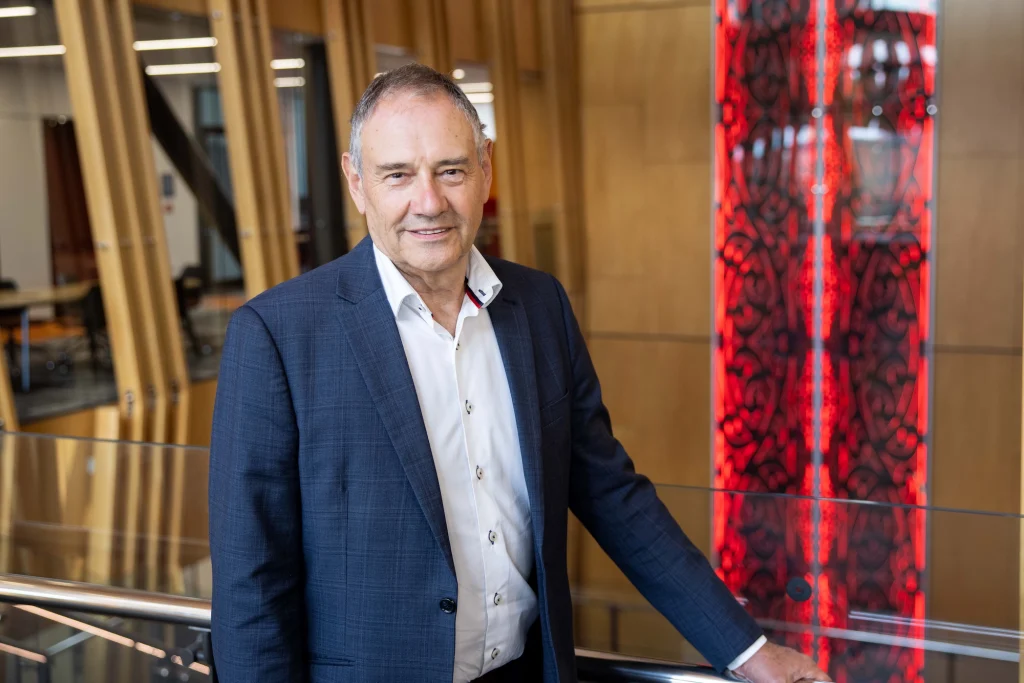
By Professor Alister Jones
Deputy Vice-Chancellor, University of Waikato
The Bay of Plenty is making strategic plans for where people will live, how they will move and where businesses will operate. But are we planning with the same discipline for who will do the work?
As I outlined recently as a panellist at the Priority One Tauranga Moana Investment Summit, physical infrastructure is only one part of the puzzle.
Unless education and workforce development become part of our core growth planning, infrastructure investment alone will not deliver the future our region is working toward.
To achieve sustainable growth, we must also invest in our future generations.
The University of Waikato will play a key part in this – but to be truly successful, it must be in collaboration with the region’s business community.
Building on our region’s momentum
It is clear that the Bay of Plenty is on a strong growth trajectory. Tauranga is one of New Zealand’s fastest-growing cities, the Western Bay of Plenty has recently signed a Regional Deal with central government, and our region is home to New Zealand’s largest port. We are also recognised for leading industries including horticulture, robotics and construction.
Within Tauranga’s city centre alone, an estimated $2 billion of development is underway. This includes Tauranga City Council’s civic precinct, Panorama Towers on Hamilton Street and the Craigs Investment Partners building on Devonport Road. The University is also investing in new facilities and accommodation for students in the city.
Across the wider region, other significant developments include Te Tumu, a new urban community in Pāpāmoa East, new community and commercial infrastructure in Tauriko West, and Rangiuru Business Park on the outskirts of Te Puke.
This investment is essential. But it can’t stand in isolation from the people who will drive it.
Every new development depends on people with the knowledge and capability to design, build, finance, operate and ensure it delivers lasting value for our community. Growing businesses need skilled employees. Expanding communities need teachers, health professionals, engineers, researchers, entrepreneurs and leaders. Emerging industries need people who can adapt, solve problems and work across disciplines.
The people who will bring these developments to life are already considering their future study and career paths.
We must treat the planning for the attraction and retention of this future workforce with the same consideration as planning for roads, housing, commercial space and other critical infrastructure.
The essential role of our Tauranga campus
The University of Waikato is strongly positioned to lead the workforce development our region needs.
We are ranked among the top 300 universities worldwide and second for research in New Zealand. Alongside our campuses in Hamilton and Tauranga, we are globally connected through campuses in Weihai, Hainan, and Hangzhou, China; and Hanoi and Ho Chi Minh City, Vietnam. We also hold strategic partnerships globally, for example with Cardiff University and the University of Newcastle, Australia.
As well as partnerships with other universities across the globe, our global connectivity matters because it strengthens what we can contribute locally. It gives our students access to wider perspectives, connects our researchers with international expertise and funding, and places us in a strong position to support the Bay of Plenty’s future workforce alongside the region’s businesses and communities.
A future-ready region needs educational and innovation infrastructure that grows alongside its housing, transport and commercial infrastructure. It also needs places where students, researchers, businesses and communities can exchange knowledge and work together.
Following the opening of our Tauranga campus in 2019, we have begun to see this vision take shape.
Our continued growth within the city
Since our opening in the city centre our student and staff numbers have continued to grow. In 2026, student numbers at the Tauranga campus increased by 9 per cent, while international student numbers more than doubled compared with the previous year. In June, more than 850 people registered for our Tauranga campus Open Day, the largest number of prospective students we have hosted.
These figures demonstrate growing demand, but the more important question is what that growth enables.
More students in Tauranga means more people contributing to the life of the city, developing connections with local organisations and gaining a deeper understanding of the opportunities available across the region.
For this reason, the University’s growth must be connected to the wider development of the city around it.
In June, the University of Waikato and Tauranga City Council signed a strategic partnership agreement aimed at developing Tauranga into a city with an integrated university presence. We want to grow the city centre through education, research and industry connections and ultimately reinvigorate it through the attraction of people – students, staff, and visitors.
It is a clear example of how putting people at the centre of a partnership can lead to greater outcomes for our community.
The opening of the new city library and community hub within Te Manawataki o Te Papa will add another important dimension. Its proximity to the campus will create further opportunities for students and the wider community to access knowledge, technology, cultural experiences, events and shared spaces in the heart of the city.
An innovation hub at 143 Durham Street is also on track to open this year. Through our partnership with Priority One, the Hiko Hub will connect businesses and communities with researchers and the wider regional innovation ecosystem.
The opportunity is not simply to establish another facility. It is to create a place where businesses can bring real challenges, researchers can contribute knowledge and expertise, students can gain exposure to regional industries, and new ideas can be tested collaboratively and real long-term value created.
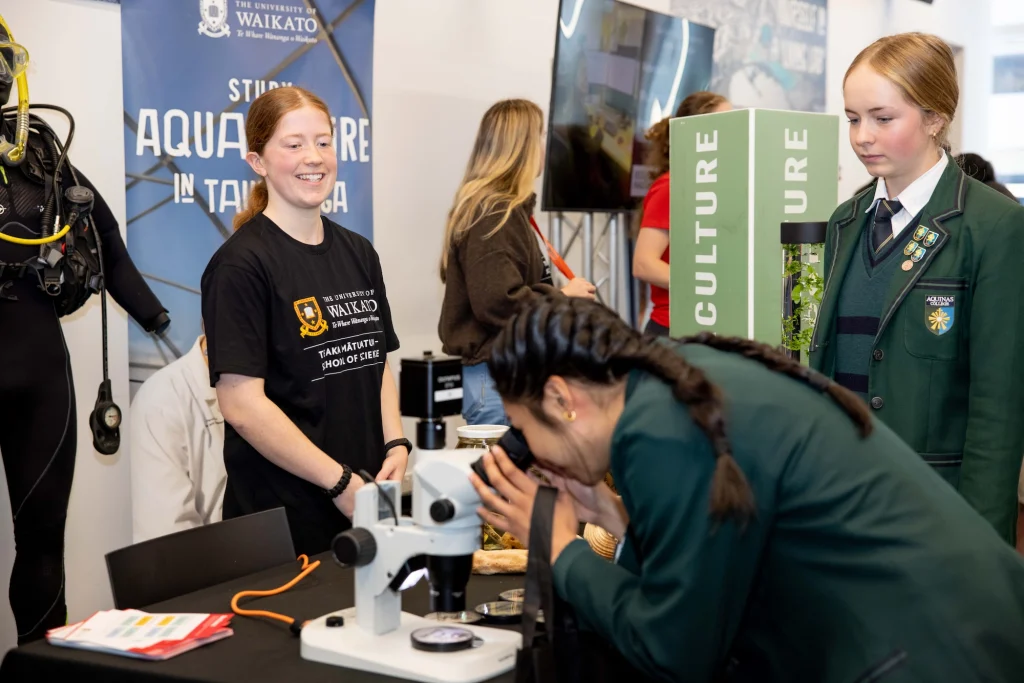
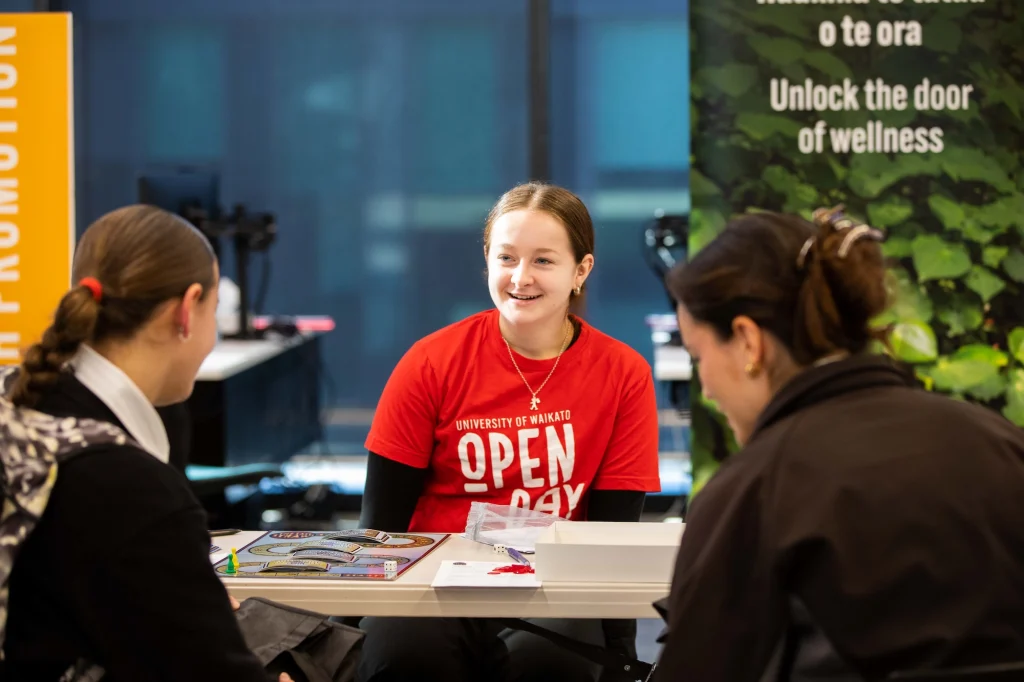
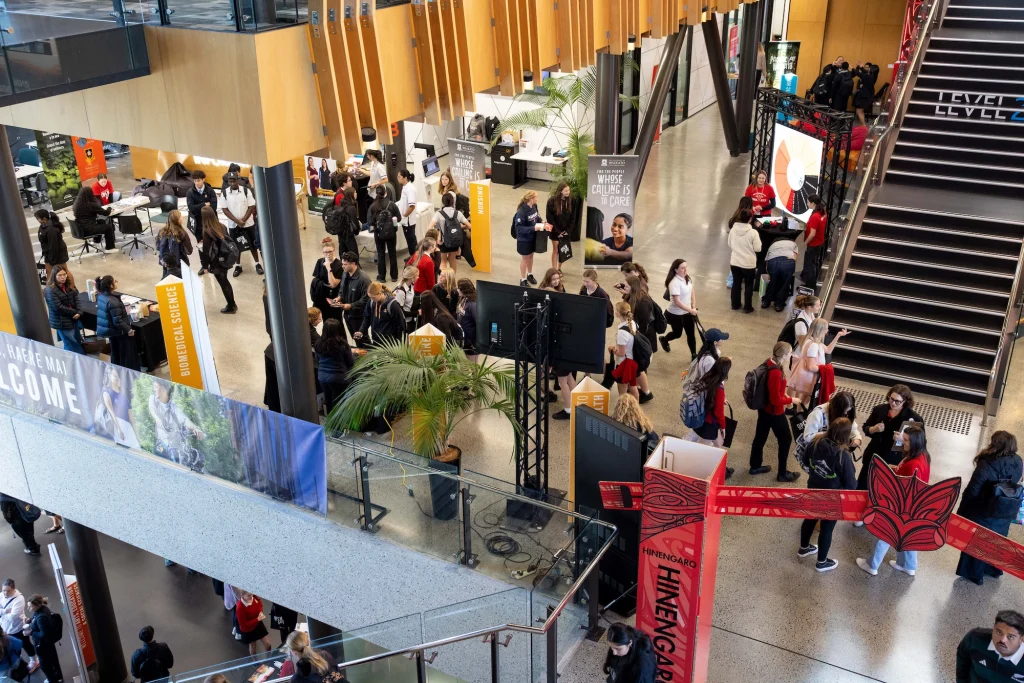
Above: Scenes from the University of Waikato Open Day. Photos by Salina Galvin.
A shared responsibility model to deliver results
Universities develop future talent by equipping students with foundational knowledge and the adaptable skills needed for long-term success. Beyond technical expertise, higher education strengthens critical thinking, problem-solving and communication.
These capabilities will become increasingly important as technology and other global forces continue to change how we live and work.
But universities cannot develop the future workforce in isolation.
All of these investments ultimately come back to people. We may build campuses, accommodation, innovation spaces and new academic programmes, but developing the workforce our region needs must be a shared responsibility.
That means involving employers, businesses, professional networks, iwi, hapū, schools, councils and community organisations earlier and more consistently in the way we think about education, research and workforce development.
It means businesses talking with us about the capabilities their sectors will require in the future, not only the vacancies they need to fill today. Creating more opportunities for students to experience workplaces through internships, mentoring, work-integrated learning and industry-led projects. Bringing researchers and businesses together to explore real challenges, test new ideas and turn knowledge into practical regional outcomes that have national and global impact.
It also means helping students understand the opportunities available to them here in the Bay of Plenty. Students cannot consider careers they have never encountered or imagine themselves working in industries they know little about.
This is where our relationships become critical. Together, we can make the pathways between education and employment more visible, relevant and accessible.
Tell us about the capabilities your industry will need. Provide students with meaningful opportunities to experience your workplace. Bring us the problems, questions and ideas that could benefit from research or academic expertise. Help us ensure our programmes remain connected to the changing needs of the region.
By investing in our future workforce now, and acknowledging this is a shared responsibility, we can ensure the Bay of Plenty is not simply growing – but growing sustainably and creating opportunities that will benefit generations to come.