
Latest News


Tauranga has long attracted people for its lifestyle. WNT Ventures’ Carl Jones argues that if we want more startups to build, grow and stay here, we also need the talent, capital, research connections and customers that help ambitious companies succeed.
For most of the 12 years that WNT Ventures has been investing in deep tech, Tauranga has been both a great place to live and a hard place to find deep tech companies. WNT reviews more than 250 companies a year from across New Zealand – to date, very few science-based companies have come from our own backyard.
That is starting to change. In the past year alone, we have invested in two local science-based companies, HumBio and Biowave. We are also assessing several more opportunities, including some coming out of the University of Waikato. That is the strongest local pipeline we have seen since 2014. It’s still a small number, but it is a signal worth acting on.
Why local startups matter
The Bay of Plenty economy is strong but concentrated. Horticulture, the port, construction and services do the heavy lifting. Each is exposed to the same handful of risks: commodity prices, weather, interest rates and global trade.
We already know Tauranga can build world-class companies. Robotics Plus (now Yamaha Agriculture), SYOS Aerospace, LawVu and Kids Ride Shotgun, to name a few, have grown from here into businesses with global customers and teams. They span robotics, aerospace, software and consumer products, which shows the opportunity is not limited to one sector.
The goal should be to have many more scalable businesses stay headquartered in Tauranga while building a global footprint. Companies like these sell into global markets and pay well. One success can create dozens of high-value jobs, train the next wave of founders and bring offshore capital into the region.
Across WNT’s 34 portfolio companies nationally, founders have raised nearly $400 million and created more than 400 jobs. Too little of that, so far, has been in Tauranga, and we are keen for that to change.
There is also a talent argument. Our people leave for Auckland, Wellington or overseas because that is where the interesting technical work is. If we want them to come back, or never leave, the work has to be here.
What makes a startup choose a region
Founders do not pick a base for its beaches. They go where they can do the work and grow the business. In our experience, that comes down to six things:
- Access to research and specialist talent
- First customers willing to trial new technology
- Capital available at every stage of growth
- Affordable lab and workspace
- A community of other founders
- Good connections to the rest of the world
Tauranga has long led with lifestyle. That matters, especially for recruiting and keeping staff. But is lifestyle still enough? My view is that it is a tie-breaker, not a decision-maker.
One signal is that very few of the investors arriving under the Active Investor Plus visa appear to be considering Tauranga. Many have built or backed companies themselves, and they are choosing Auckland, Queenstown and Hawke’s Bay.
Perhaps it is the vineyards?
Our vines grow kiwifruit, and that’s a strength we wouldn’t change. What we can change is the six things above.

What the investment and business community can do
Connect research to commercial opportunities. The University of Waikato’s Tauranga campus and the region’s horticulture, forestry and marine science capability are real assets. Much of that research never meets an investor or a business that could use it. More regular, structured contact between researchers, industry and investors would surface opportunities earlier. We know this already happens, but we would love to see more of it.
Be the first customer. Our largest local businesses, in horticulture, logistics and primary processing, face exactly the problems new technology companies solve. A pilot contract or trial site is often worth more to a young company than a cheque, and it de-risks the technology for the business running the trial.
Our exporters and the port already connect Tauranga to the world. Opening those networks to founders, through introductions to offshore customers, distributors and investors, would give a young company global reach without having to move.
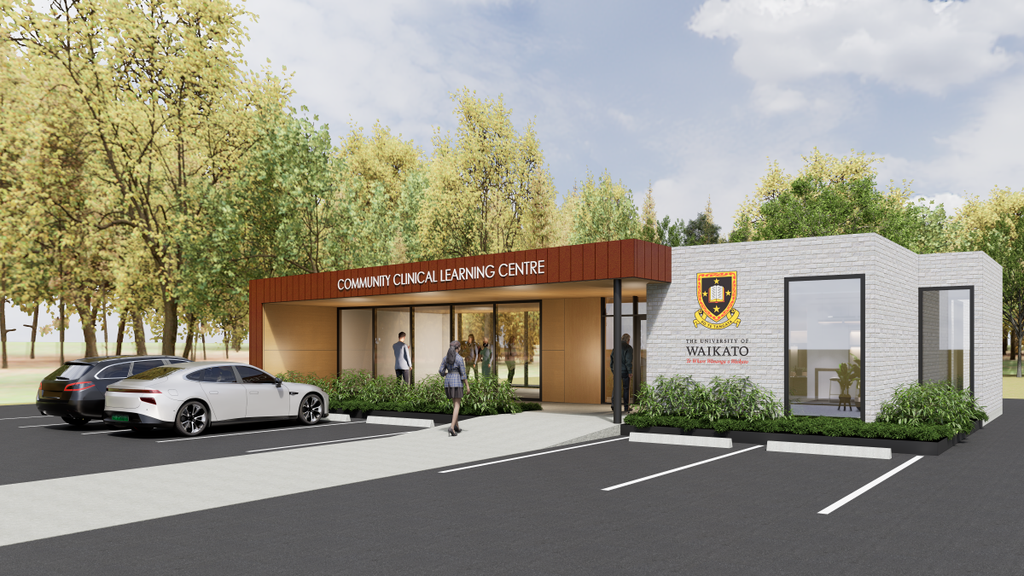
Back the university’s big bets. The University of Waikato has two major projects underway that matter to the region: its new Graduate School of Medicine and the New Zealand Institute for Marine Futures. The medical school will build health and life science capability across the wider region.
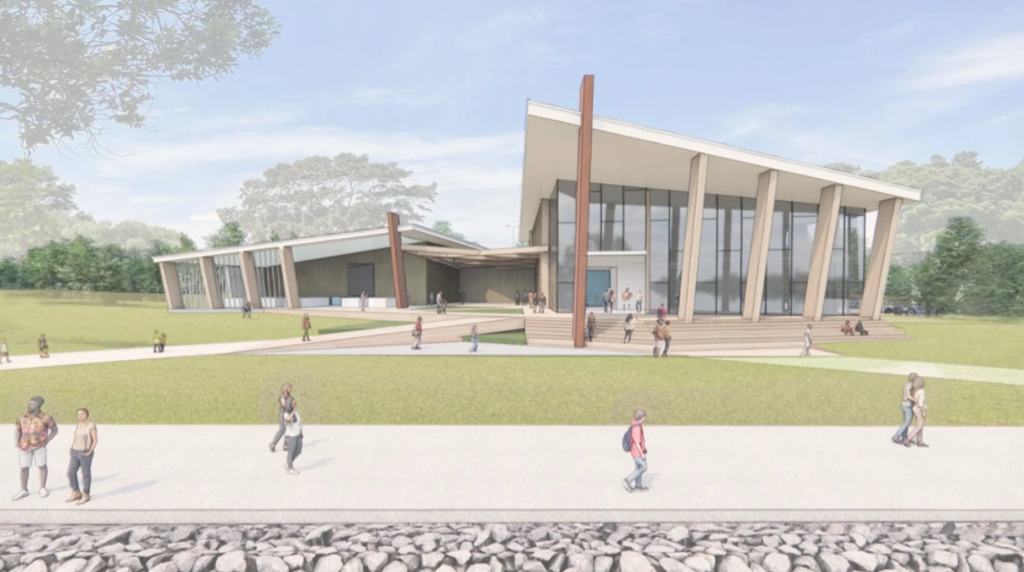
For Tauranga, Marine Futures is the bigger prize. The proposed facility at Sulphur Point would sit next to the country’s largest port, with research and dry labs, aquaculture R&D space and collaboration space. The facility would also include a public aquarium, exhibition areas and teaching space. It would be the only facility of its kind in New Zealand focused on marine resilience, restoration and the blue economy.
That matters because science attracts scientists. A facility of this calibre draws researchers and students here. Each one brings new ideas, and some will become founders. It would also give spinouts somewhere to start without leaving. The community case is just as strong, opening the harbour and the science on it to families, schools and visitors. The business community should get behind it, and push for space within it for early-stage companies.
The Marine Futures building won’t open for some years. In the meantime, founders need affordable lab and pilot space now. Shared or subsidised facilities, potentially alongside existing research or industry sites, would let science companies start here rather than in Auckland or Christchurch.
Keep talent circulating. The biggest long-term payoff from companies like Robotics Plus, SYOS and LawVu is the people they train. Engineers, product leads and commercial staff who have helped scale a global business are exactly the people who go on to start, join or invest in the next one. When that talent stays in the region and circulates back into new ventures, the flywheel starts turning. Each success seeds several more, and the ecosystem grows on its own momentum. That is when Tauranga starts to look very interesting. We should make it easy for these people to take the leap here, with access to capital, mentors and peers, rather than in Auckland or offshore.
Deepen the capital pathway. Founders often leave when their next round of funding is somewhere else. The good news is that the main links in the chain exist locally. WNT Ventures backs early-stage science companies. Enterprise Angels brings angel capital and experience. Oriens Capital provides private equity for established businesses, and Craigs Investment Partners brings wealth management and capital markets reach.
What is missing is depth and choice.
Most of that capital is equity, and most of it has a similar mandate. Not every good company fits that mould. A business with steady revenue may be better suited to debt or revenue-based finance than giving away shares. A company solving an environmental or social problem may suit an impact investor. One working on a long-term science problem needs patient capital that will wait 10 years, not five. There are three further sources we could do more with:
- Family offices and iwi investment entities, which have long horizons and deep local ties
- Corporate venture, where our large exporters and port-linked businesses invest in technology relevant to their own operations
- Secondary sales, which let early investors and staff sell some shares, freeing up capital to back the next company
The more options a founder has here, the fewer reasons they have to move.
Why this also brings investors
The things that keep founders here are the same things that attract investors, including those on AIP visas. Those investors want quality deal flow, credible co-investors and a community of peers. Marine Futures gives them a reason to visit and a science base to back. A deeper capital pathway gives them a role that suits their mandate, whether that is equity, debt, impact or patient capital. A talent pool shaped by local companies gives them founders worth backing, and shows this is a place where global businesses get built.
Build for founders and the investors will follow.
A window worth taking
A handful of investable local companies is not yet an ecosystem. But it is more than we have had before, and momentum in early-stage markets compounds. Each success makes the next company easier to start, fund and staff.
Tauranga already has the lifestyle. What we need now is to build the reasons to choose it that sit alongside lifestyle. That is a job for investors, businesses, research institutions and local government together. The time to start is while the pipeline is growing, not after it has moved elsewhere.

Carl Jones is Co-founding Managing Partner of WNT Ventures and a member of Priority One’s Investment Advisory Group.
Investment provides the foundation for a growing, prosperous region. Priority One helps attract and enable the capital, businesses and infrastructure investment needed to unlock opportunity and support sustainable long-term growth. Learn more about our investment work and read other recent opinion pieces.
Signup to our newsletter with free local events, insights and opportunities.