
Latest News

Trevelyan’s is focused on continually improving energy efficiency across the business. We learn more about its new approach to solar, as well as emissions reduction work around electrifying its fleet and managing peak demand for coolstores.
Introduction
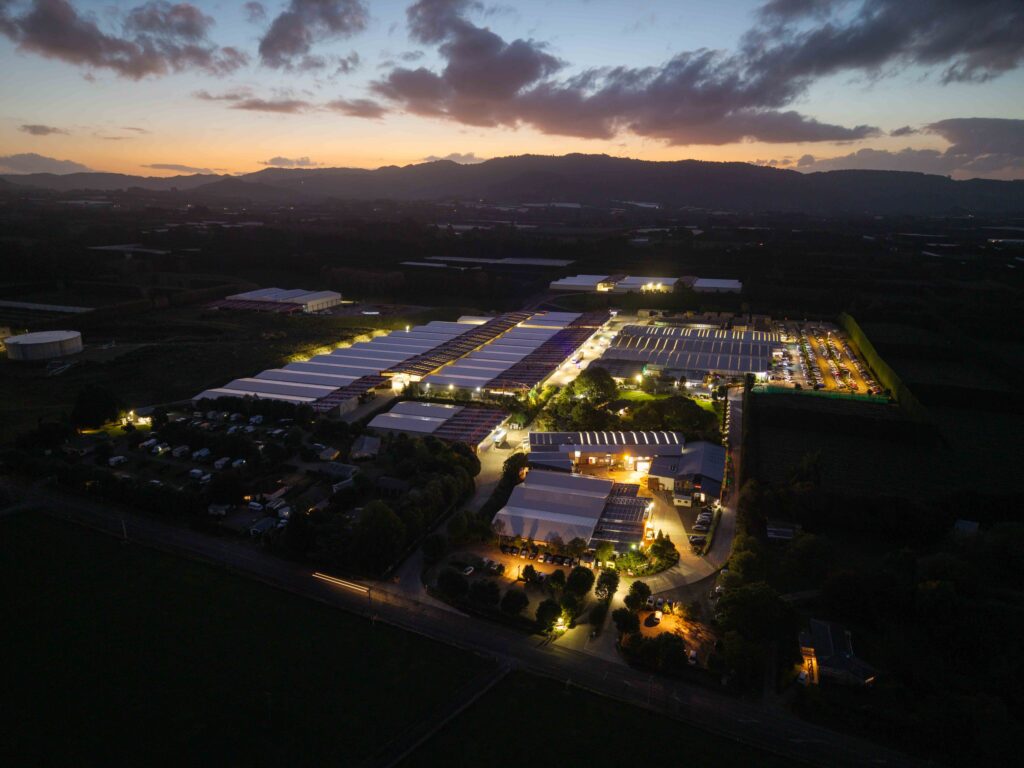
Based in Te Puke, Trevelyan’s provides postharvest services for the kiwifruit and avocado industries, including orchard management, picking, packing, cool storage and technical support. The company’s 30-hectare site includes 43 coolstores (which make up around 85% of sitef energy use), one domestic market packhouse and four export packhouses. It leads the industry as the lowest-emissions postharvest operator (per tray) among those who publicly report emissions.
Trevelyan’s continues to innovate in sustainability. Past emissions reduction projects include the Kiwifruit Postharvest Industry Refrigerant Decarbonisation Project (which addressed ageing coolstore infrastructure and high global warming potential refrigeration gases), installing LED lighting across the packhouse, and achieving $320,000 in savings in 2025 by diverting waste from landfill into recycling and composting.
Trevelyan’s current initiatives: Q&A with Georgia Mischefski-Gray, Sustainability Advisor
After around 15 years of evaluating the commercial viability of solar, Trevelyan’s has now decided the payback stacks up. Tell us about this new project.
From 2021 to 2025, we had a 45% increase in electricity costs – about $3.4 million last year, so it’s a massive operational consideration. We want energy resilience for our organisation, as well as carbon emissions reductions and pricing security.
We have modelled the solar to be our baseload – the amount we’ll always consume each year. If you imagine the energy curve, it changes, so this gives us confidence that our base load is covered.
The huge bonus is that ASB offered a low-interest loan to fund the project, given it would reduce our carbon emissions.
How much of your total electricity consumption will be offset by solar?
It will generate 900,000kWh per year (to put that in perspective, an average house would use about 6,000kWh per year). Out of our annual consumption, solar will offset about 6% of our total electricity needs. That means we’ve still got 94% – around 14,800,000kWh – to solve in terms of energy resilience.*
How did you land on the right system size for your energy use?
A few different factors. We worked out the optimal balance between meeting our baseload and selling to the grid. That’s how we landed on a 720kW system that generates around 900,000kWh annually.
In an ideal world, we wouldn’t sell anything back to the grid because the returns are much lower. In peak summer, when everyone’s generating, you can be getting close to zero, so we want to minimise that. But realistically, we will still be selling to the grid at certain times – such as weekends, public holidays, and days when we’re not packing.
For the remaining 94% electricity consumption, you’ve started exploring a different approach – tell us about that.
Yes, we’re seeing if it commercially stacks up, as it’s a New Zealand first.
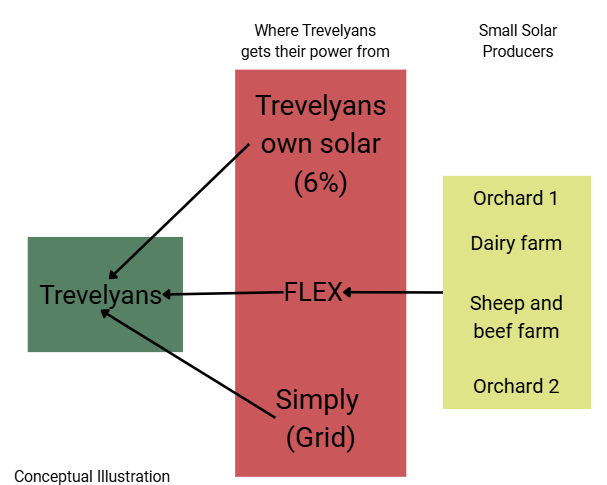
How it works: we’ve got our own solar – about 6% of our power consumption. We’ve also got Simply Energy, which is our energy contract where power is purchased off the grid. As the grid is around 85% renewable, 15% is non-renewable and we then have emissions associated with that.
To solve this issue and give us further resilience, we are working with FLEX, a company that’s a joint venture between Farmlands and Blackcurrent, which is working with farmers and growers to install solar on their sheds, cow sheds etc, then selling the excess energy from all these small producers to the grid. We are looking into whether we can buy the power off FLEX at a price that’s higher than the typical grid buy-back rate, but still a discounted price for us compared to the grid (see graphic above). So it’s a win-win.
Our other problem is our seasonal demand curve (see graphic below) – we want most of our electricity from March to June, and then less for the rest of the year. Whereas dairy farms, for example, want their solar July through to March, and then don’t need it as much. We can help fill that demand curve when they don’t need the solar they generate – we find a midpoint, where we’re getting a discount and they’re getting more than they would on the grid.
It’s a completely new imagining of an energy system model. I’m very excited about it, because we can solve a few different problems here. The small solar producers don’t have to sell back to the grid over summer, where there’s often no real incentive because the buy-back rates are low. At the same time, we get access to more renewable energy at a better price. It’s essentially a PPA, but instead of one large supplier, it’s consolidating a whole lot of smaller ones.
The next step for us is to test it. We’re looking to set up a pilot, work through the commercial framework, and start engaging others, including our growers. We’d like to provide some form of incentive for our growers to be involved, but we’ll need supply from right across New Zealand, not just locally.
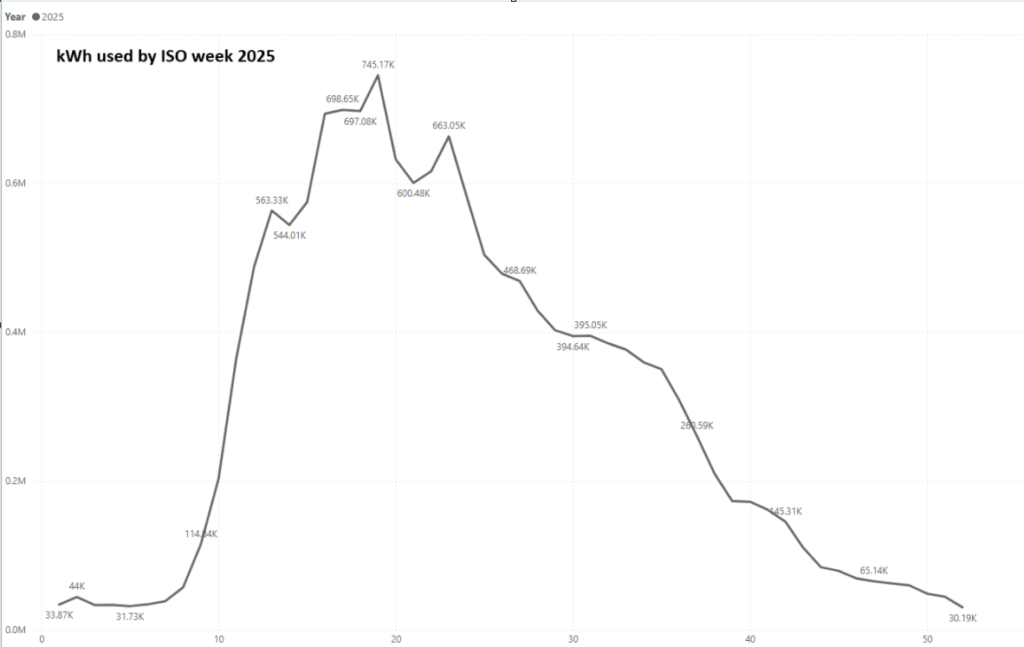
Bottom axis is ISO weeks (ie 0 is January, between 20-30 is June, and 50 is mid-December).
Tell us about the energy-saving work around your coolstores?
Electricity is more expensive in winter, and during early morning and evening peaks, so turning off coolstores at these times is a cost saving. We turn power off based on the ambient temperature outside and the fruit that’s in there. Right now, with colder evenings, we’re turning them off for longer periods – it’s all automated with sensors monitoring temperature. We’ve found there’s been no change to fruit quality.
Trevelyan’s has just passed a new fleet strategy – what’s your approach here?
This is all about how we get to our goal of a 90% emissions reduction by 2050 (2021 is the baseline year). Part of this is an 18-month action plan.
We’re bringing in a vehicle procurement guideline to help standardise how we buy vehicles, which is based around solid data. We’re trying to make sure the right people are in the right vehicles. If we’re buying a ute, there needs to be a genuine business reason. And if someone’s in an EV, they need to have the charging capacity and a role that works for it. If the infrastructure isn’t there, or the role doesn’t suit it, people will just get frustrated and we won’t get the culture change we’re aiming for.
We’re also looking at our on-site capacity. At the moment, we’ve got two chargers, six BYD Sharks and four full EVs, and we’re already starting to feel the pressure on charging. So we’re using the data to understand what we’ll need next.
On top of these current projects, what are your long-term plans to achieve energy resilience?
I’d like to see an innovative solution to help us meet that seasonal demand. The FLEX model might not stack up, but something else might come out of this. I’d also like to see us being open to new technologies to facilitate more onsite renewable generation.
This would assist with risks like increased storm damage. We’re a post-harvest packhouse, so we can’t be out for too long. If we had storm damage for two or three days, that would be a lot of generator fuel to burn. Having a buffer in terms of on-site electricity generation would help us.
Our vision is around creating value for the long term. Trevelyan’s is open to trialling new things and being a leader in this space, and we’re more than happy to share our learnings, because if we progress, the industry progresses.
We’re willing to be the guinea pig and share what we learn so the industry moves forward collectively. Collaboration is the only way we’re going to solve these issues.
This piece is part Priority One’s energy-focused work. We want to engage as many businesses as possible in our energy conversations – find out more here, and sign up to our fortnightly newsletter featuring expert insights, opportunities and free events here.