
Latest News


By Dr Rachel S.Y. Tan
Lecturer in Law (Cyber law), University of Waikato
What happens when you give law students a hypothetical $50,000, an access to justice problem, and only a few hours to come up with a solution?
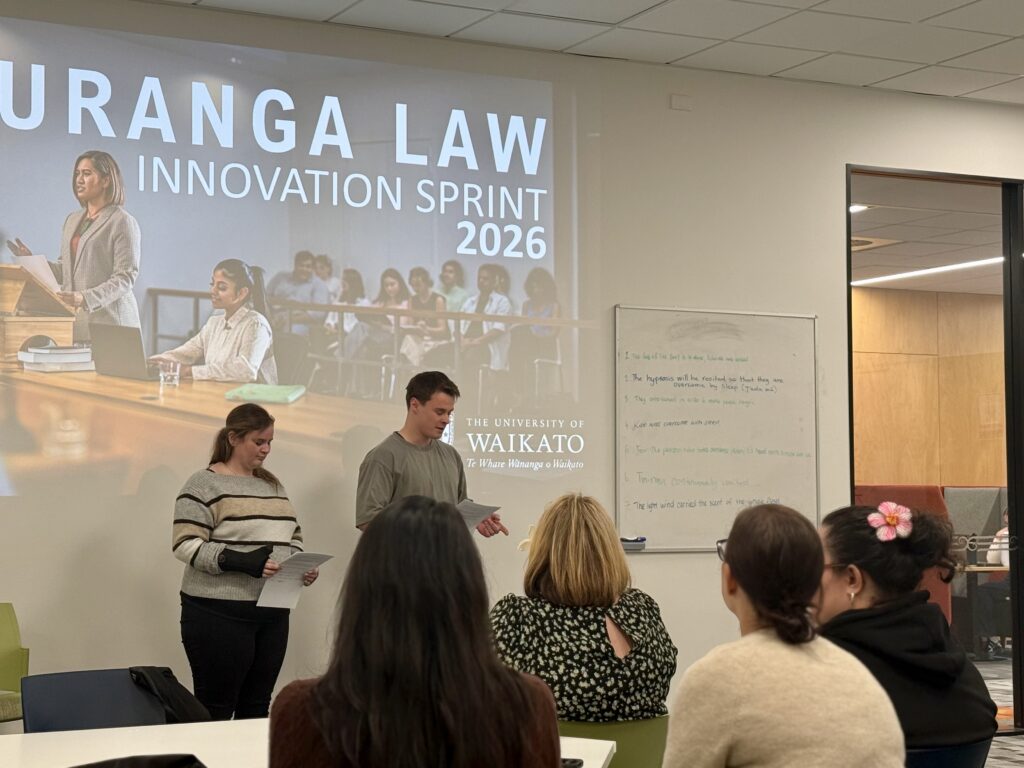
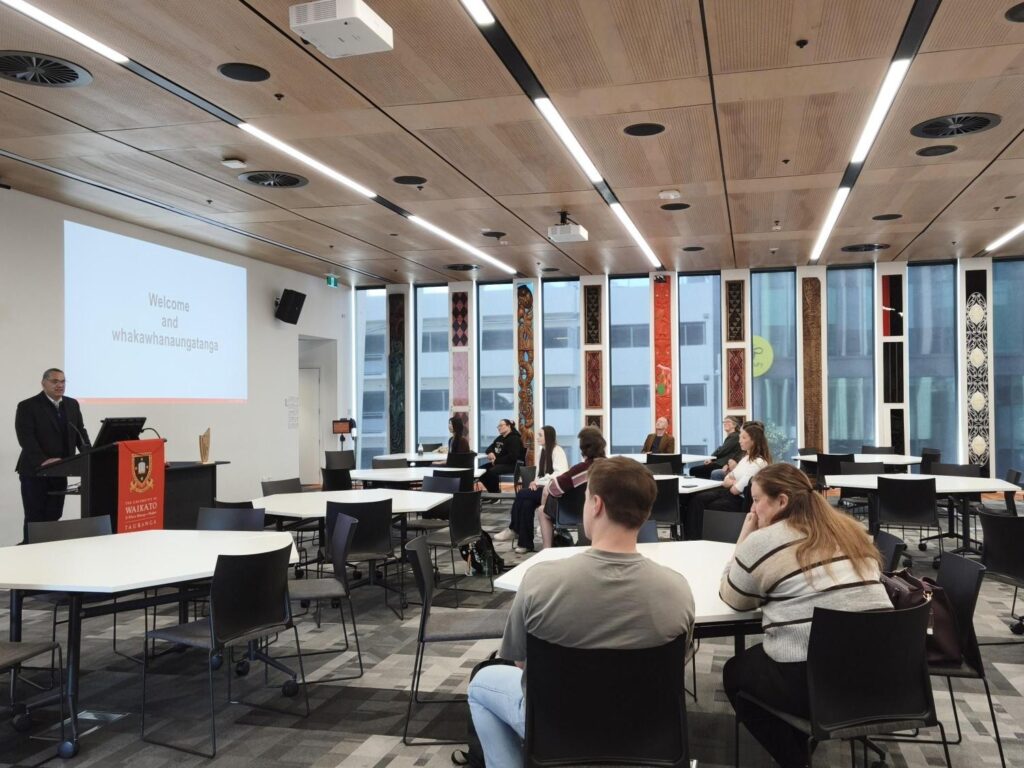
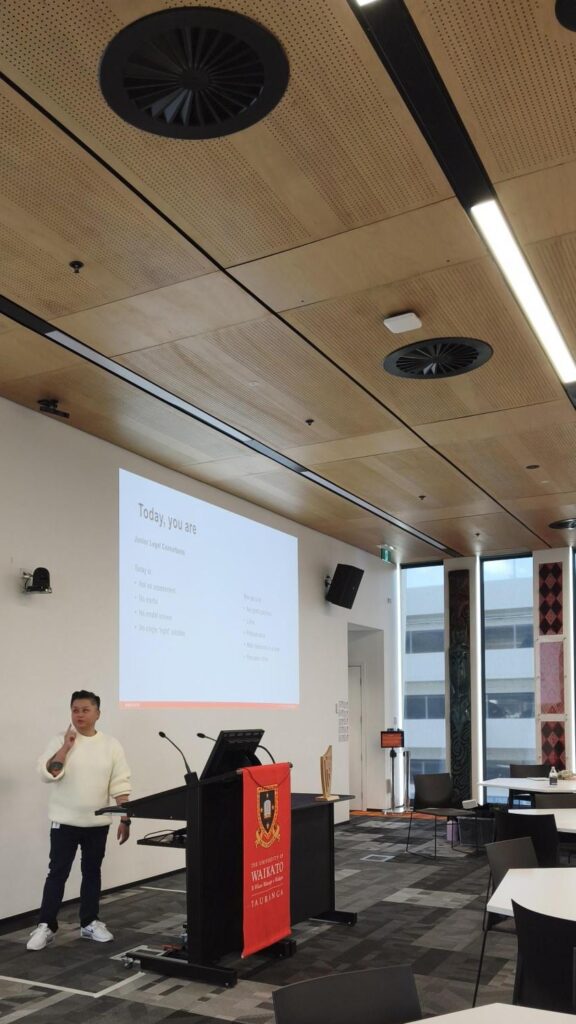
That was the idea behind the inaugural Tauranga Law Innovation Sprint, held at the University of Waikato’s Tauranga campus on the 26 August. I created the Sprint because I wanted students to have an opportunity to experience something a little different from the way we often learn law. Law students are used to being given a set of facts and asked to identify the legal issues and work towards the legally correct answer. In practice, of course, problems are often much messier than that.
For the Sprint, students worked in teams as junior legal consultants on the theme Reimagining Access to Justice in Tauranga. They were asked to identify an access-to-justice problem affecting the local community and develop a practical and innovative response.
The challenge was deliberately designed to be quite open, to encourage creativity in finding solutions. There was no model answer and students had to make decisions as a team about which problem they wanted to focus on, who was affected by it and what might realistically make a difference.
Students then worked through three stations over the course of the morning. The first focused on researching and understanding the access-to-justice problem. At the second, students took their developing ideas to Pollett Legal, where they could test them against the realities of legal practice. At the third, they worked with Tauranga City Council to think about community impact, partnerships and sustainability.
The idea was that their solutions should evolve as they moved through the Sprint, rather than students coming up with an idea at the beginning and simply trying to prove that it was right.
That was probably one of the things I most wanted students to take from the experience. I wanted them to ask questions, listen to what people were telling them, test their assumptions and be willing to change their minds. If someone working in practice tells you that part of your idea may not work, that is not the end of the idea. You take that information, think about it and make the idea better.
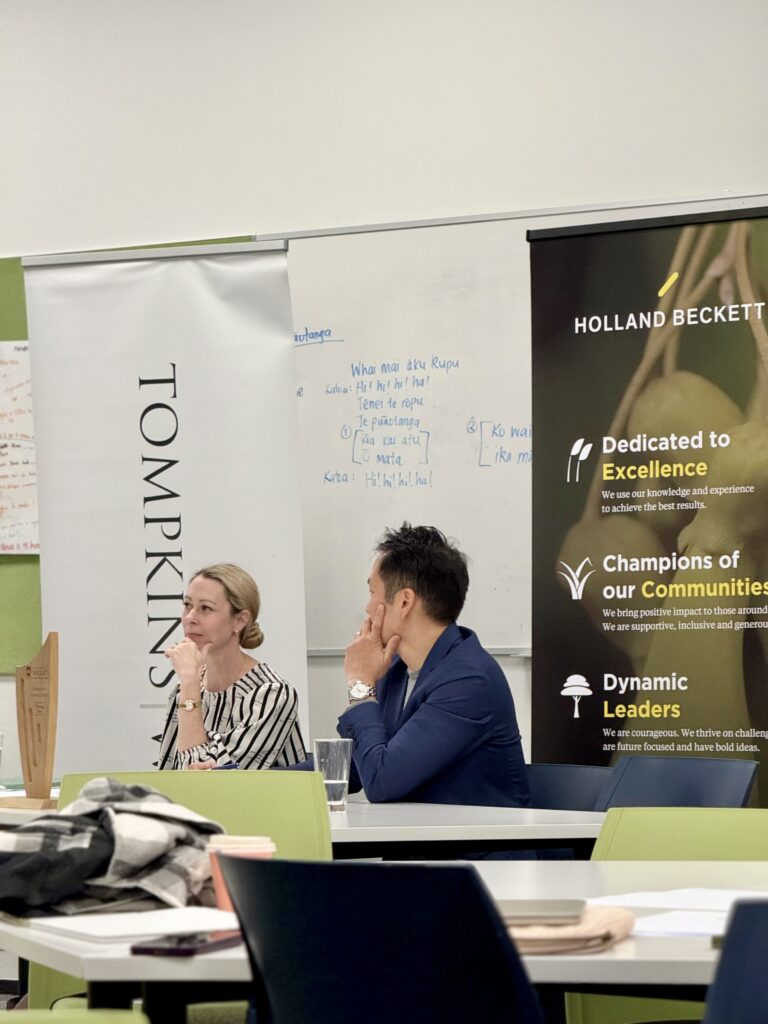
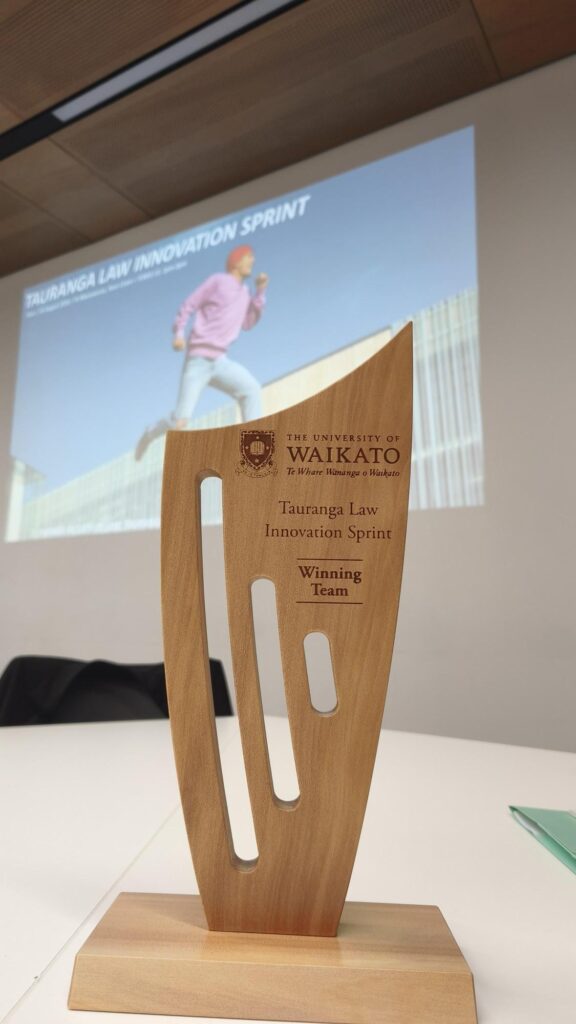
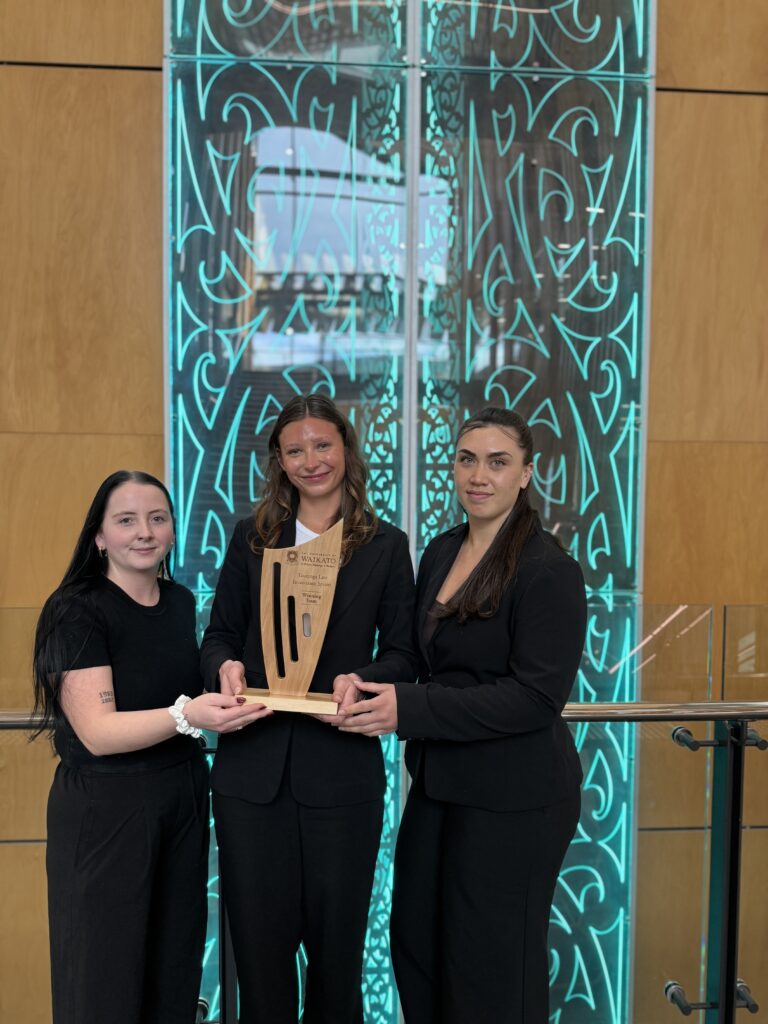
At the end of the Sprint, each team had eight minutes to pitch its final proposal to a judging panel comprising Jonathan Ng, Social Impact Lead at Holland Beckett, and Shelley Slade-Gully, Partner at Tompkins Wake, followed by questions from the judges.
“What I enjoyed most about judging the Sprint was seeing students wrestle with the reality that access to justice is a genuinely difficult problem. There are no simple fixes, and real progress requires us to better understand the problem before we can hope to solve it. That’s where legal innovation comes in. We need more lawyers who are prepared to think creatively about how legal services are delivered and how the law can better serve our communities. It’s encouraging to see students engaging with those questions so early in their careers. The competition wasn’t just about developing solutions, it was about fostering a mindset that I hope they’ll carry with them throughout their professional lives: that the law can and should be used as a force for good.” – Jonathan Ng, Social Impact Lead, Holland Beckett.
What impressed me most was how much the students’ thinking developed in only a few hours. They threw themselves into the challenge, and by the time they presented their final proposals, they had thought not only about the legal problem but also about implementation, feasibility, ethics, partnerships and the people their ideas were intended to help.

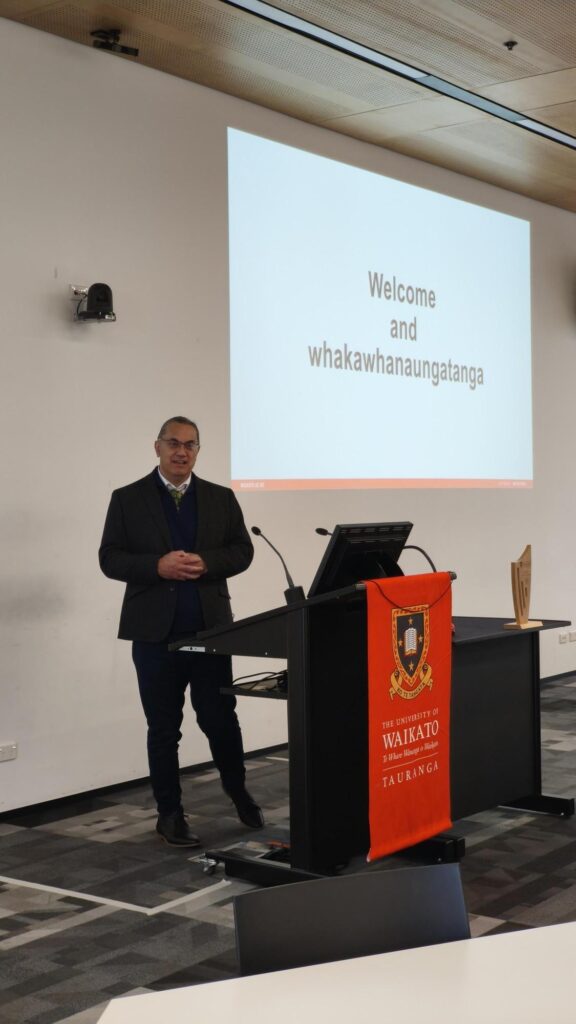
Holding the Sprint in Tauranga was also important. We have students studying law here in Tauranga, and I want them to have opportunities to connect what they are doing at university with what is happening around them. Bringing the University, the local profession and local organisations together gives students a chance to have those conversations and to see the range of ways in which their legal education can be used.
As an inaugural event, the Sprint was something of an experiment – including for me. But seeing the students embrace the uncertainty, work together and produce the quality of ideas they did was incredibly rewarding.
That is really what the Sprint was about: giving students the space to try something, test it, change it and see where their legal thinking can take them. And after the success of the first one, I think there is plenty of scope to build on it.
If you’d like to learn more about the Tauranga Law Innovation Sprint, or are interested in getting involved in a future Sprint, I’d love to hear from you. Contact me at r.tan@waikato.ac.nz.