
Latest News

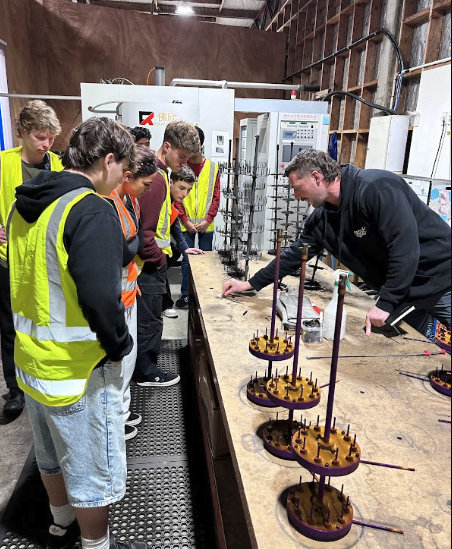
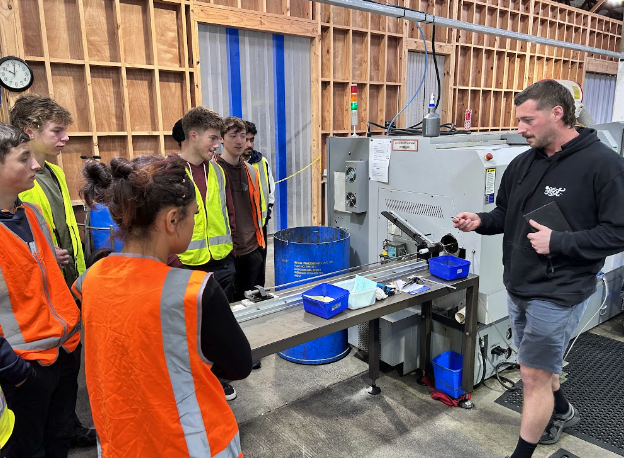
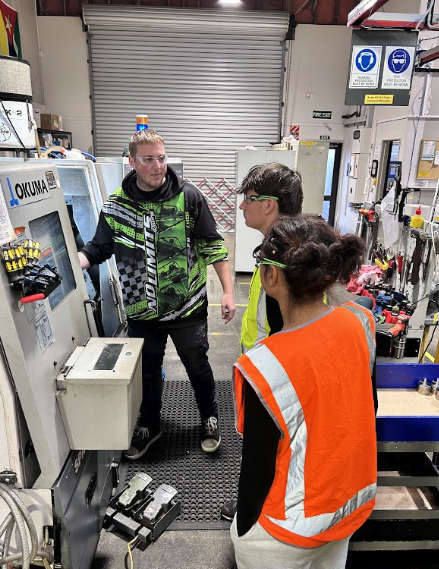
I want you to think for a moment about a screw. It is probably one of the least interesting things you have considered today. Small, functional, easily replaced. Most of us would give more thought to finding the right screwdriver than to where the screw came from.
But follow it backwards.
Before it became a screw, somebody had to decide what it needed to hold, what material it should be made from, how much pressure it could withstand and what kind of environment it would need to survive. Somebody designed it. Somebody designed the machinery that would make it. Someone programmed that machinery, maintained it, tested the finished product, checked its tolerances and worked out how to make thousands of them consistently.
Then there is the material itself. Someone sourced it. Someone negotiated the supply. Someone moved it. Someone monitored cost, quality and waste. Eventually, somebody has to sell the screw.
And suddenly this supposedly boring little object has led us through engineering, automation, software, design, materials science, logistics, quality control, maintenance, procurement, sustainability, sales, marketing and management.
Which raises an interesting question. When we ask a 16-year-old whether they are interested in a career in manufacturing, what exactly do we think we are asking them?
Because “manufacturing” is not one job.
And that is where programmes such as the Manufacturing Passport become interesting.
Delivered by Advancing Manufacturing Aotearoa (AMA) in partnership with Priority One, the programme takes Year 11–13 students out of the classroom and into manufacturing businesses across the Western Bay of Plenty. Recent visits have included Shot Darts and Oasis Engineering, where students have been able to see the people, technology and processes behind products being made here in Tauranga.
On paper, they are industry visits.
In practice, they do something much more useful: they dismantle assumptions.
Career education has a difficult job. We routinely ask young people what they want to “be” before they have had the opportunity to see much of what there is to become. Job titles are presented neatly on websites and course brochures, while actual working lives are rarely that tidy.
A student might have absolutely no interest in becoming “a manufacturer”, whatever they imagine that means, but be fascinated by robotics. Another may love design, chemistry, coding or solving mechanical problems. Someone else may be brilliant with people, logistics, numbers or finding a faster way to do something.
All of them could potentially find themselves inside a manufacturing business.
Papamoa College Career Advisor Brad Miller said seeing those workplaces first-hand gave students a very different understanding of what happens inside them.
“It was an excellent way to see what goes on in these businesses, the roles within them and how to get into the industry,” he said.
He also saw a shift in how students perceived manufacturing as a career option, particularly once they could see the equipment being used, understand what workers actually do each day and hear about the qualifications and pathways that led them there.
That distinction matters because we can tell a young person that manufacturing involves technology, engineering and innovation. Or we can take them somewhere they can stand beside the machinery, watch the process happening and ask the person operating it how they ended up there. The second conversation tends to be much more interesting.
Shot Darts Operations Manager Josh Honey saw that curiosity during a recent student visit.
“The students asked lots of questions and were highly engaged with our staff, which was awesome,” he said.
Questions are probably a better measure of success than whether a student walks away declaring they have found their future career. Because the point is not to funnel every student who enters a factory into manufacturing. It’s to give them more information than they had when they walked in.
Most of us understand something differently once we can touch it, test it, pull it apart or see it being made. For a teenager trying to make sense of an abstract idea called “my future”, this experience can be particularly powerful.
And perhaps we need to think differently about pathways altogether. We tend to talk about them as though they are clearly marked roads: choose a subject, choose a qualification, choose a profession, arrive at career. Real life is more like following the screw.
You start somewhere small. You notice something that interests you. You follow it. It leads to another question, another skill, another person or another possibility you did not know existed.
Tom Collin, Head of Future Pathways at Tauranga Boys’ College, said the school was keen to continue participating after its recent manufacturing experiences.
“We hope that the programme will run again next year. We are definitely keen to make it happen.”
For Priority One, that connection between young people and local businesses is an important part of developing the region’s future workforce. But there is another benefit that is less easily measured. Young people begin to understand the economy they are already living inside.
The businesses they drive past become places where real people design things, make things, export things, solve problems and build careers. The word “manufacturing” stops being an industry category and becomes a collection of possibilities.
And perhaps that is a better place to begin the career conversation.
Not, “What do you want to be?”
But: What catches your attention? What are you good at? What kind of problems do you like solving? What do you want to know more about? Then follow that.