
Latest News

Merivale Community Centre is the result of decades of community effort, culminating in a purpose-built facility shaped by clearly defined local need.
Story produced by Marra Construction
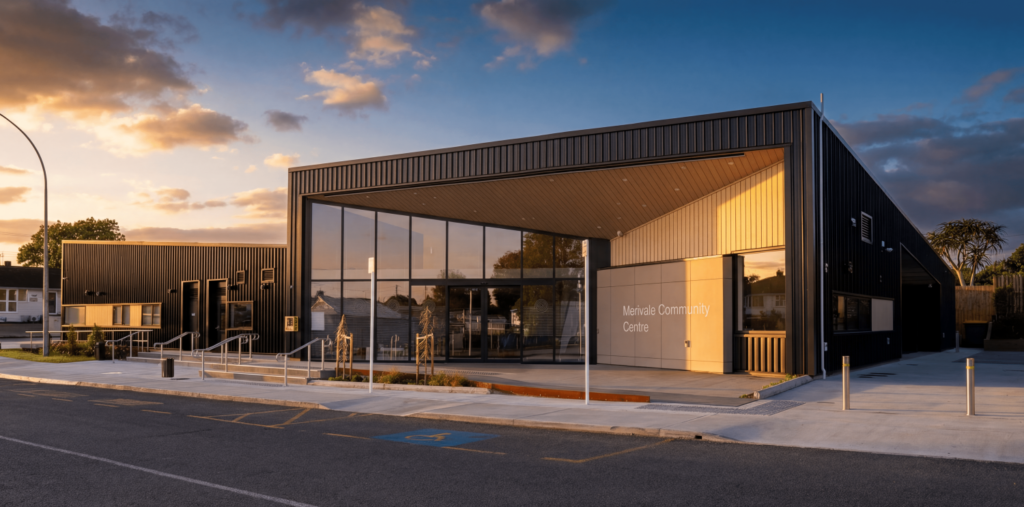
There is a pocket of Tauranga Moana that most people drive past without a second glance.
Merivale sits at the bottom of New Zealand’s old socioeconomic decile scale – decile one – and at the top of the deprivation index. On paper, the numbers paint a hard picture. On the ground, the story is one of kindness and hope. Dave Merton, the General Manager of the Merivale Community Centre, will be the first to tell you: this community has always had a real heart. People look after one another here. They forgive. They show up. What they lacked, for a long time, was the right space for that to happen.
The seeds of the centre were planted around 1990, not in a boardroom, not through a government programme, but in the back of a van. Young people in Merivale were getting into trouble. The community noticed, and rather than wait for someone else to act, locals organised. They pooled what they had, got hold of a van and started taking rangatahi on trips. It was grassroots in the truest sense: no funding, no formal structure, just people who knew their neighbourhood and cared enough to do something about it.
By the early 1990s, that energy had found a temporary home in a local shop. Then, around 1993, the operation moved into something more permanent, an old returned servicemen’s estate house nearby. It wasn’t purpose-built for a community centre. It was a three-bedroom house with a sunken lounge. But it was theirs, and they made it work. Poppa Bill Wilson was one of the originals. He still comes in today, walking the building, making sure things are running the way they should be.
The house became the heart of Merivale’s social infrastructure. Over the following three decades, through leadership changes, funding pressures, and the inevitable ups and downs of community work, the centre held its focus: support young people and serve the wider community around them. Services expanded: food assistance, social support, youth programmes, budgeting help. The centre drew people not just from Merivale but from across the Tauranga Moana rohe: from Matakana Island, from Judea, from the Kaimais, from Pāpāmoa. Word travels in communities that know how to look after their own. But the building was showing its limits.
The sunken lounge that had served as the centre’s operational heart for over two decades was never designed for this kind of work. The community knew what they needed. When formal consultation took place in 2015, local people asked for a large training kitchen, space for communal meals, medical rooms, dedicated spaces for youth, and above all else, private rooms where people could speak freely without their business becoming everyone else’s. The question was never whether the community deserved it. The question was whether the money would ever come.
The path from dream to building took the better part of 15 years and tested everyone involved. The proposed building site for a new community centre site had complications from the start. A part of the site, an old church, became contaminated with asbestos when it was demolished, rendering it unusable for a period and stalling early ambitions entirely. Initial proposals were shelved. The 2015 consultation produced a clear vision but no funding to match it. Then came a breakthrough. Former manager Sophie Rapson, alongside her father and Chairperson Chris Rapson, took the fundraising case directly to private donors. By 2019 they had secured $4.08 million, a remarkable achievement, and enough to move towards construction.
A 2020 start was planned. Then COVID-19 arrived. The pandemic didn’t just delay construction, it transformed the economics of it entirely. By 2022, projected building costs had nearly doubled to close to $8 million. The gap between what had been raised and what was now needed was demoralising. For many, it felt like the window had closed. It was the intervention of Council Commissioners, prompted by a community centre survey, that changed the outcome. They reviewed the situation, stepped in, and guaranteed the remaining funds. The project was formally approved in early 2022. Some design adjustments were made to manage the cost overruns, but critically, every feature the community had asked for seven years earlier remained in the final plans. Ground was broken. The building went up. And in late September 2025, the Merivale community walked through the doors of a facility built around their own words.
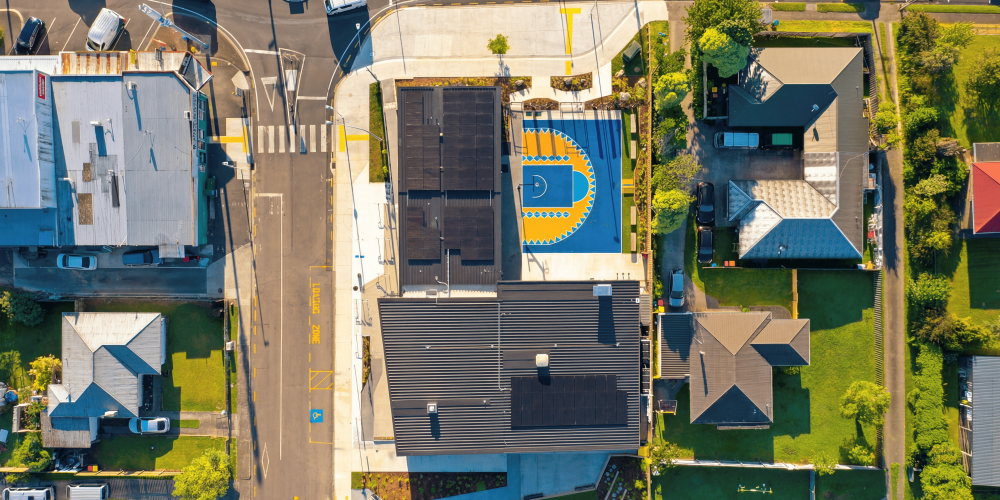
Fast forward to today, and by 7am the centre is already running. The external block, showers, toilets and laundry unlocks automatically before dawn. A queue has often already formed: local workers grabbing a shower before a shift, rough sleepers who have been given access codes so they can use the facilities late into the evening, with doors staying open until 11pm for those who need them. An hour later, staff arrive and begin preparing the building for the day. By 9am it is fully alive. On a Monday, a nurse practitioner leads a medical team in one of the centre’s dedicated consulting rooms. Elsewhere in the building, a gardening group plans their week, a fitness class runs on the basketball court, a budgeting service operates for community members, and in the Pekerangi room, mothers and young children gather in what has become a sanctuary of its own: warm, safe, unhurried.
The medical room includes a discreet pass-through connected directly to an accessible toilet, allowing patients to provide medical samples without walking through a public hall. It’s a design decision made entirely around human dignity. By mid-afternoon the energy shifts. At 2.45pm local schools kids and youth begin filtering in. Youth workers have food ready by 4pm. Visiting teachers run literacy and numeracy sessions. Basketball runs on the court outside until the light fades. On Wednesdays, youth completing a 10-week life-skills cooking programme prepare meals that fed 20-40 people. That’s not a statistic. That’s a room full of neighbours eating together.
Within the first three months of opening, more than 65 external agencies had used the building to deliver services to Merivale and the surrounding region: physiotherapy, Zumba, Te Reo Māori classes, dance, fitness, cooking, immigration support, neighbourhood gatherings, and cultural celebrations for the Chinese and Filipino communities, who also call this corner of Tauranga home.
The Merivale Community Centre did not arrive. It was earned, over thirty years, by ordinary people who wanted something better for their community and refused to stop until they had it. Today, the pride with which Merivale has claimed this place as its own is the only testament that matters. This is their second home. They built it.