
Latest News

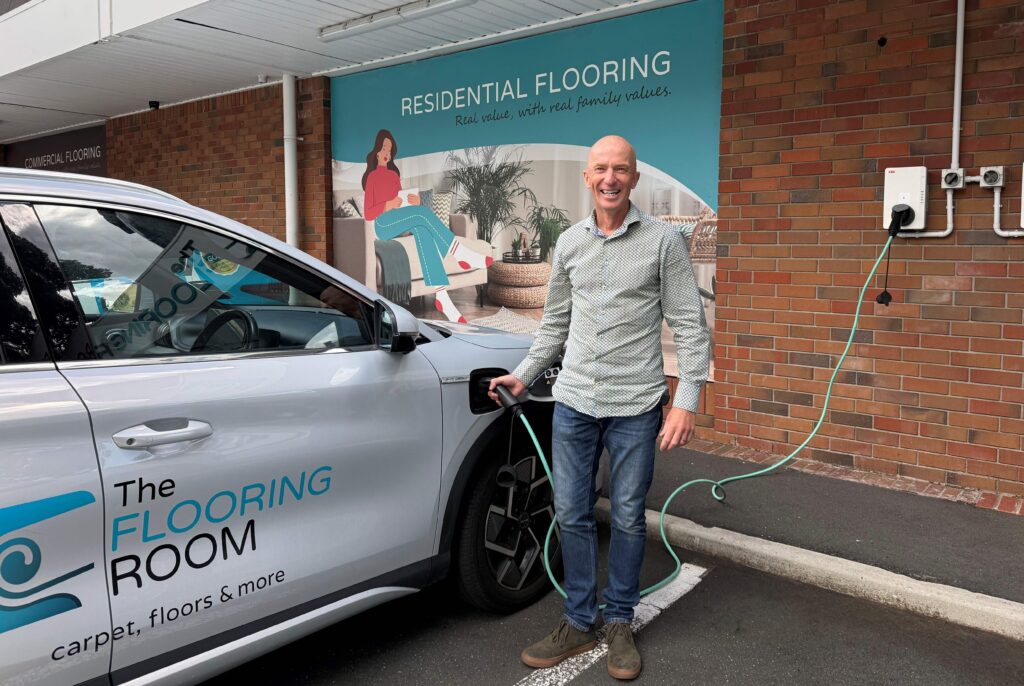
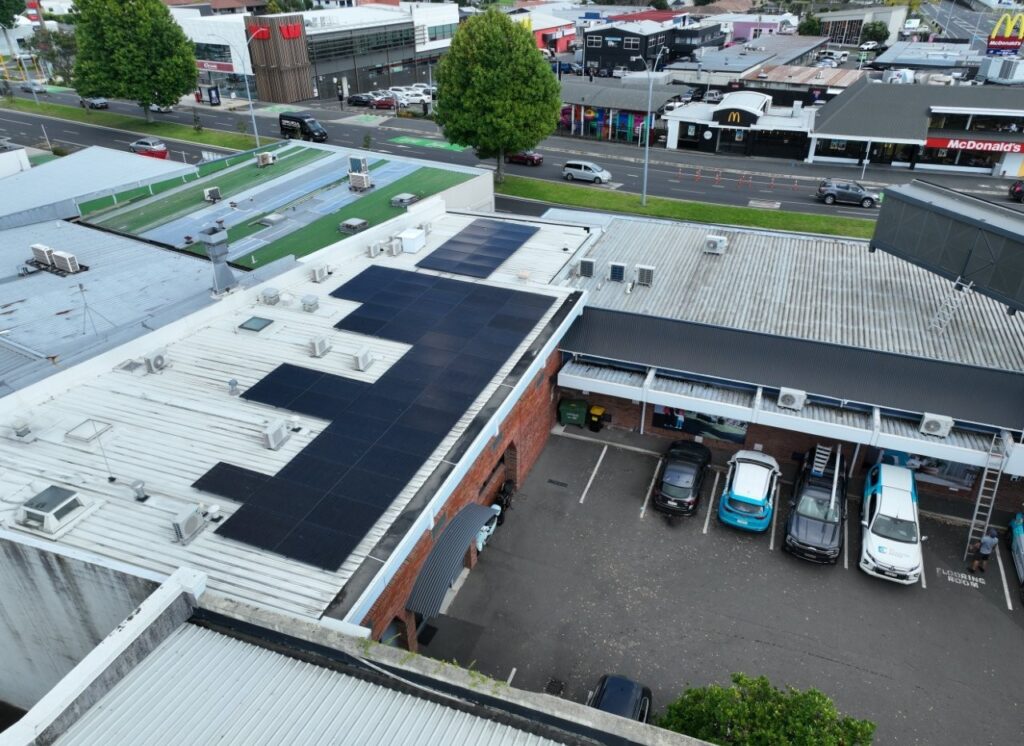
Steve Ferris, owner of The Flooring Room, has installed solar panels on the roof of his commercially leased building in Eleventh Ave, Tauranga. We asked him about what prompted him to make the move, how he negotiated it with his landlord, and how it has panned out from a business and financial standpoint.
What first made you consider solar?
A few years ago, we looked at the environmental impact of our activities at The Flooring Room and thought about how we could do better. This project actually followed an event put on by Priority One about waste minimisation and environmental impact. We identified a number of areas where we could minimise our footprint. This included things like recycling uplifted underlay, finding second homes for uplifted flooring in good condition, and partnering with organisations like Good Neighbour to support their social efforts.
And, of course, we had a good look at our energy use – the first thing we did was to start replacing our old vehicles with EVs. It made sense, as the next step, to look at the possibility of solar to power our showroom, offices and electric vehicles.
Was this primarily an environmental decision, a financial decision or both?
It was primarily an environmental decision, but being a small business, the financial impact was also considered carefully.
What were your energy costs doing before you installed solar?
For our Eleventh Avenue site, our monthly power bill was around $1200 per month, which would have only gone up.
How much of your electricity does the system now cover?
Now, our bill averages around $800 per month (it varies a bit by season) – this is despite the fact we’ve added more EVs to the fleet, so our power usage has actually gone up. I would say the system covers more than half our electricity usage.
Did incentives, grants or financing play a role?
Yes. There was no grant or incentive available, but with banks offering green loans, that lower interest rate made the decisions easier. These can be used for things like EVs and solar, and although the rates are not as good as for home loans, even with a business loan it makes the financial commitment easier.
How long is the payback period?
At the time we committed to the system it was assessed as about five to six years. It looks like the payback will now be more like seven years – but this is even after the increased power usage from EVs.
What assumptions did you have at the start that turned out to be wrong?
We didn’t factor in the increase in usage of power from EVs. Aside from this, the system has performed largely as expected. To be honest, the thing that surprised me the most was the feel-good factor when you know the sun is largely running your power and fuelling your vehicles.
Has switching fleet vehicles to EVs reduced operating costs?
We haven’t actually looked at this in any detail. Our expectation is the running costs of the EVs is lower (they are typically charged at work during daylight hours, so the energy use is largely free) and maintenance is low. However, they were more expensive than the old fleet, so with depreciation I would expect the saving is small, if anything. The team love driving them.
Did you hesitate because you lease the property? What changed your mind?
Yes – this was an obstacle to overcome but we structured the lease variation in the landlord’s favour to make it an easy decision for him. We pay for the system, we get the benefit while we are a tenant, and at the end of the lease, the ownership passes to the landlord at no cost to them. Any issues are our responsibility. With such a short payback (and an expected useful life of 25 to 30 years), we win, and the landlord wins without doing anything. We are currently in discussions with another landlord about doing the same at his site.
What advice would you give to other businesses who lease?
Price up a system, chat to your landlord and structure a fair deal – it’s all pretty easy.
If you had to describe the financial case in one sentence, what would you say?
We’ve always believed in investing in decisions that make sense in the long term – whether it’s team, relationships, suppliers, equipment or solar. With a six to seven year payback, a 25-year life expectancy, savings from day one, and green loan at around 6%, it’s a no brainer.