
Latest News

Priority One is currently undertaking a programme of work that seeks to understand our energy context and develop a regional energy strategy to drive the Western Bay’s economic transition. Following a recent geoheat workshop at Tauranga Racecourse, Kennie Tsui, CEO of the New Zealand Geothermal Association (NZGA), outlines why this is becoming a serious opportunity.
New Zealand’s geothermal sector is entering a new phase. While geothermal has long been associated with renewable electricity generation, growing attention is now turning to geoheat – the direct use of geothermal heat for industrial, commercial, agricultural and community applications.
That momentum is being driven by rising energy costs, decarbonisation pressures and the Government’s newly launched New Zealand Geothermal Strategy – From the Ground Up. Together, these signals are creating a strong opportunity for businesses to explore geothermal heat as a reliable, low-emissions energy solution.
Why geoheat matters
Geoheat offers something unique in New Zealand’s renewable energy mix: always-on renewable heat. Unlike weather-dependent renewables, geothermal heat is available 24/7, making it attractive for industries requiring continuous process heat such as food processing, manufacturing, timber drying, aquaculture and greenhouses.
For businesses, geoheat can help:
- reduce exposure to volatile fossil fuel prices,
- lower emissions,
- improve long-term energy resilience, and
- support sustainability commitments.
Importantly, geothermal is increasingly recognised not only as an energy solution but also as a driver of regional economic development and Māori economic growth.
What we heard from industry
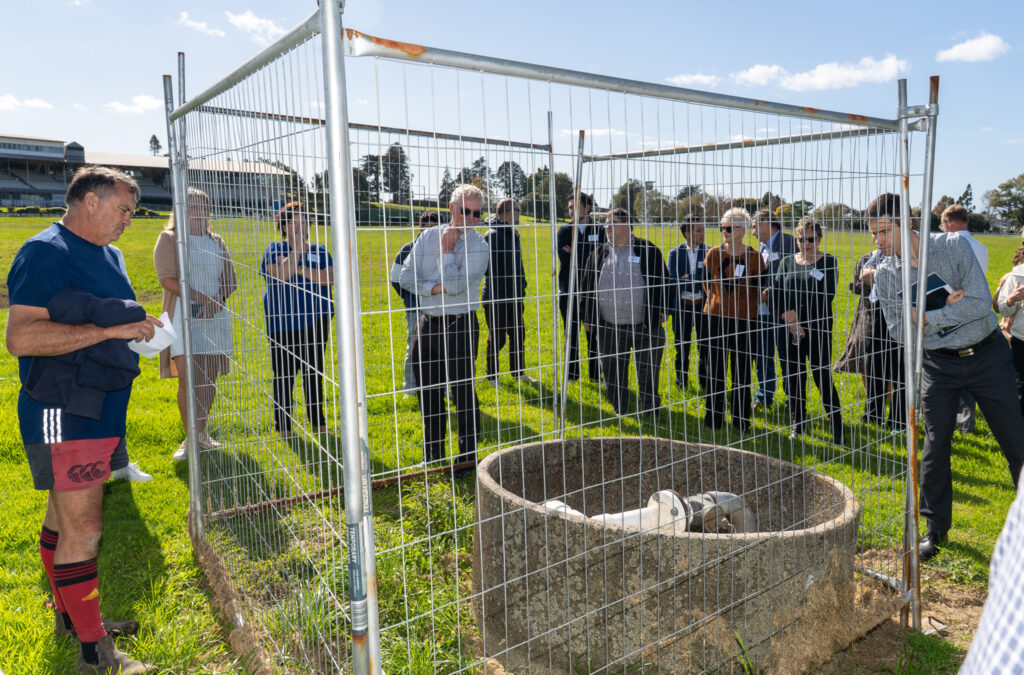
At a recent NZGA geoheat workshop in Tauranga, businesses showed strong interest in geothermal opportunities – but also highlighted practical barriers.
Fittingly, the workshop was held at the Tauranga Racecourse, which already utilises a ground source heat pump system within its facilities – providing a practical example of how geothermal technologies already support low-emissions infrastructure in Aotearoa New Zealand.
Many organisations still see geothermal as complex, uncertain and relatively high risk, particularly for smaller or moderate heat users. Key concerns included:
- limited early-stage feasibility information,
- uncertainty around drilling and project costs,
- lack of understanding of low- and medium-temperature applications,
- and questions around infrastructure, consenting and financing pathways.
Compared with alternatives such as solar or heat pumps, geothermal can be harder to assess at an early “back-of-envelope” stage. That uncertainty can make it difficult for businesses to confidently evaluate opportunities.
This reflects the wider shift now underway – businesses are increasingly beginning to connect geothermal heat with practical, local opportunities to reduce emissions and improve resilience.



A sector with growing momentum
The Government’s Geothermal Strategy – alongside Regional Infrastructure Fund investments – signals stronger national support for geothermal development. Across the sector, momentum is building around:
- industrial heat conversion projects,
- low- and medium-temperature geothermal applications,
- Māori-led geothermal development,
- and emerging geothermal technologies.
Partnership with tangata whenua is becoming increasingly central to the sector’s future, recognising iwi and hapū as kaitiaki and long-term partners in geothermal development.
A practical starting point
To help businesses navigate the opportunity, NZGA developed the Geoheat Business Guide in Aotearoa New Zealand. The Guide provides practical, accessible information what geoheatis, where opportunities may exist, how geothermal projects are developed, and the key commercial and technical considerations involved.
Geoheat is no longer a niche conversation. It is becoming an increasingly important part of New Zealand’s energy, economic and decarbonisation future. The challenge now is making geothermal easier to understand, easier to assess and easier to develop.
Businesses that begin exploring geoheat opportunities now will be well positioned to benefit from the next phase of New Zealand’s energy transition.
This piece is part of an ongoing Priority One series focused on energy. We want to engage as many businesses as possible in our energy conversations – find out more here, and sign up to our fortnightly newsletter featuring expert insights, opportunities and free events here.