
Latest News

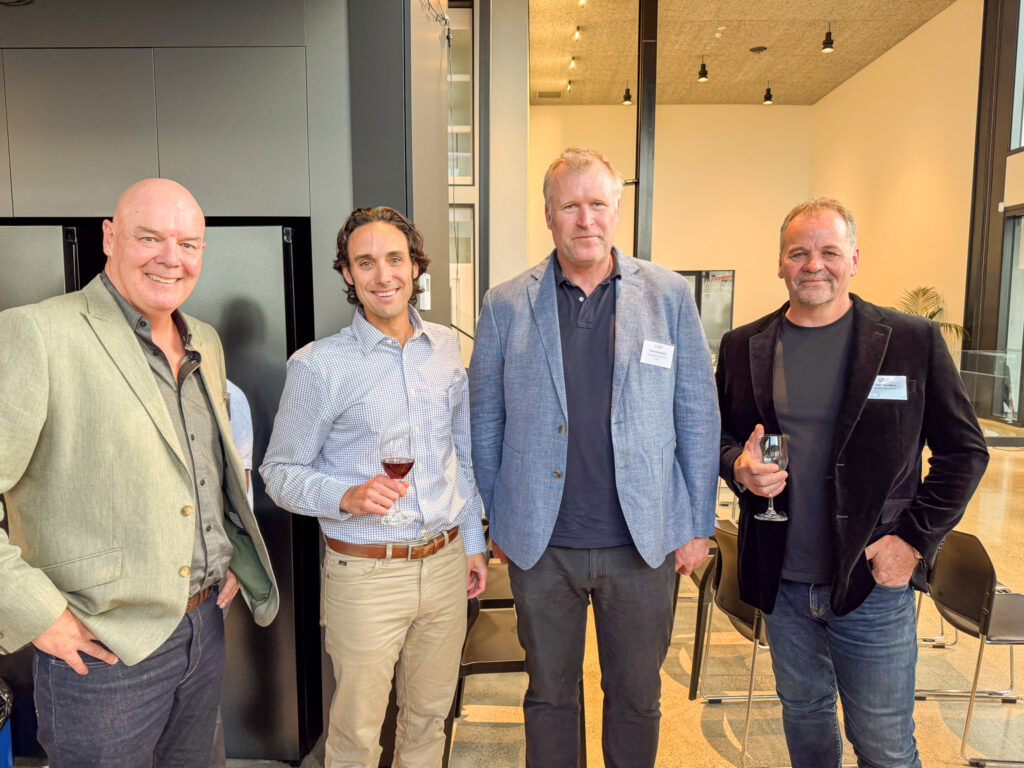
What does it take to build a globally relevant technology company from a regional base?
For Robotics Plus co-founder Steve Saunders, the answer is not a single breakthrough moment or a perfectly formed idea. It is something more practical and more enduring. A combination of lived experience, pressure, curiosity and a willingness to think beyond the immediate environment.
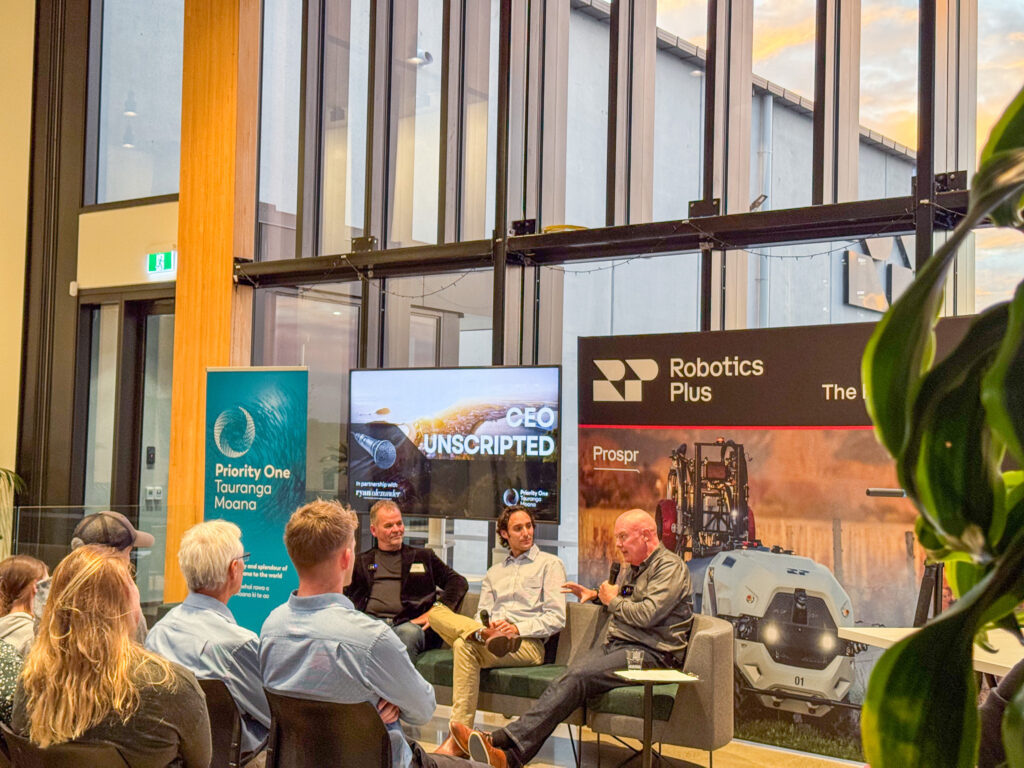
Speaking at Priority One’s CEO Unscripted event, in conversation with Dave Courtney, Saunders traced the origins of Robotics Plus back to a much earlier starting point than most would expect. It did not begin in a lab or a pitch deck. It began sweeping floors.
Looking at a payslip earning $3.18 an hour, Saunders realised early that he wanted to build something different. Growing up around agriculture, then moving into horticulture in the Bay of Plenty, he developed a deep connection to the land and the challenges growers face. That connection became the through line of his career. Curiosity around automation followed. Not as an abstract idea, but as a practical response to real problems.
“I’ve always loved agriculture and the land,” he said. “That’s been the drive. The robotics came from combining that with an interest in how things work.”
Robotics Plus formally came together in the early 2010s, but the company did not begin with a finished product ready for market. Instead, it built capability first.
Saunders described how early growth relied heavily on project-based funding and partnerships, often working alongside universities and government-supported initiatives. These projects allowed the company to employ engineers, build systems and test ideas long before a commercial product existed.
It was a deliberate strategy. From the outset, Saunders was clear that if the business was going to succeed, it had to be built for global scale, not local optimisation.
New Zealand, he noted, is not a large market. That reality forces a different mindset. One that looks outward early and builds the systems, people and processes needed to operate internationally. That approach came with pressure. Even with external funding, the business ran tight.
“Tightness never goes away,” Saunders said.
In the early years, he supported the venture with income from existing agricultural businesses. That balance between risk and stability allowed Robotics Plus to continue investing in capability while navigating the long gap between concept and revenue. One of the defining moments in that journey came not from technology, but from crisis.
The arrival of PSA disease in the kiwifruit industry in 2010 created widespread uncertainty. For Saunders, it also accelerated a shift in thinking.
At the time, he was running a pollen business that helped fund ongoing innovation work. When PSA hit, the viability of that operation was suddenly unclear. With large volumes of product in storage and significant daily costs, the situation forced rapid decision-making under pressure. Rather than retreat, it reinforced the need to diversify and build resilience.
That period sharpened the strategy behind Robotics Plus. It was no longer about incremental improvement. It was about creating systems and technologies that could withstand volatility and operate at scale. A recurring theme throughout the discussion was the difference between having an idea and building a business. Saunders was direct on this point. The idea, even the prototype, is the easy part. What matters is everything that follows.
“How are you going to scale it? How are you going to manufacture it? How are you going to support it in market?”
These are the questions that determine whether a concept becomes a company. This perspective shaped how Robotics Plus grew. The team invested early in manufacturing capability, commercial systems and market presence, often building ahead of immediate need. It also influenced how Saunders approached leadership, spending significant time in-market to build trust with customers.
The result is a business that extends well beyond engineering. It includes production, distribution, service and ongoing customer support, all of which are essential to operating globally. That long-term approach reached a major milestone in 2025, when Robotics Plus became the foundation of Yamaha Agriculture’s robotics capability. For Nolan Paul, CEO at Yamaha Agriculture the decision to invest in and acquire Robotics Plus was not about geography. It was about mindset.
He pointed to the way New Zealand growers operate. Competing in global markets without the advantage of scale forces a focus on quality, efficiency and innovation.
“You can’t compete on cost here,” he said. “You win on quality.”
That same mindset is embedded in Robotics Plus. It is one of the reasons the Tauranga-based operation now plays a central role in a global organisation. The site remains a key innovation hub, with a focus on developing technology that improves productivity, supports better decision-making and responds to ongoing labour challenges in horticulture.
As the business continues to grow, the constraint is no longer the idea or even the technology. It is talent. Software engineering, particularly at the intersection of hardware and software, remains one of the hardest areas to recruit. These roles require a hybrid skillset that is still relatively scarce globally.
At the same time, the company is navigating broader shifts in agriculture. Industries such as wine and apples are under pressure, with structural changes underway in key markets. For Robotics Plus, this creates both risk and opportunity. The focus is moving beyond automation alone. The machines being deployed are also collecting data, generating insights that can help growers make better decisions and improve outcomes over time.
It is a shift from solving immediate labour challenges to enabling a more informed and efficient system overall. Underlying all of this is a deliberate approach to culture. Chief People Officer Penny Rae emphasised that culture at Robotics Plus is built through recruitment and purpose, not surface-level initiatives.
The company runs a rigorous hiring process, often with multiple stages, to ensure alignment from the start. The goal is to bring in people who are motivated by solving real-world problems and contributing to something meaningful.
“Doing good in the world matters,” she said. “We are working on something that is critical to all of us, which is our food supply.”
That sense of purpose, combined with strong systems and leadership, has helped the company maintain its grounding even as it scales. What emerges from Saunders’ story is not a narrative of overnight success or a single defining innovation. It is a story of accumulation.
Experience built over decades. Decisions made under pressure. Systems developed before they were needed. A consistent focus on real problems rather than abstract opportunity. And a clear understanding that being based in a region like the Western Bay of Plenty is not a limitation. It is a starting point. The question is not whether a global company can be built from here. It is whether the thinking behind it is designed for the world from the beginning.
Make sure to sign up for the next CEO Unscripted here.